
The Money That Keeps America’s Trails Open Is Shrinking
National, state, county, and city parks all depend on money that is shrinking or under threat. Congress has until Dec. 11 to settle the national parks’ budget, states are already cutting, and local parks could lose federal help. Volunteers are filling gaps, but they can’t do it alone.
America’s national parks just started their new budget year on Thursday, Oct. 1. A stopgap law signed Sept. 2 will keep them funded at this year’s levels until Dec. 11 (Computing Research Association, Congressional Research Service). After that, Congress will have to choose between keeping park funding steady and a White House plan that would cut the money for running the parks by about a quarter.
That decision lands on a Park Service that is already being stretched thin. It has lost nearly a quarter of its permanent workforce since January 2025, according to the National Parks Conservation Association. From Ohio to Washington state, park budgets that pay for trail upkeep are shrinking, and more of the work is falling to volunteers.
What Changed in Washington, D.C.
Three changes are adding up for the ones who keep trails open.
The staff. The Park Service’s permanent workforce has shrunk by nearly 25% since January 2025 (NPCA).
The repair fund. The Legacy Restoration Fund, created by the 2020 Great American Outdoors Act to fix park roads, buildings, and trails, stopped receiving new money on Sept. 30, 2025 (Outdoor Alliance, National Park Foundation). Money already in the fund is still being spent. The America the Beautiful Act would restart it. It passed the Senate Energy and Natural Resources Committee on June 17 and is waiting for a vote of the full Senate (Senate Energy and Natural Resources Committee).
The next budget. The Park Service’s own budget request for fiscal 2027 would cut its regular funding by around a third and leave the agency with 2,920 fewer full-time positions (National Park Service budget request).
| Budget line | This year | 2027 request | Change |
|---|---|---|---|
| Regular funding | $3.27B | $2.21B | −$1.06B |
| Running the parks | $2.88B | $2.14B | −$0.74B |
The same request adds a new $10 billion construction program for projects in the Washington, D.C., area, funded outside of the regular budget.
Congress turned down a similar cut last year and held park operations flat for 2026 (NPCA). The deadline to decide this year’s budget is Dec. 11, after the midterm elections, though Congress can extend it again.
The Ripple Reaches State Parks
States are making their own cuts, often to close budget deficits, and trail work is slowing.
In Ohio, the Legislature’s 2026-27 budget cut the operating budget for Ohio State Parks and Watercraft in half, from $55 million in fiscal 2025 to $27.7 million in fiscal 2026, and Gov. Mike DeWine signed it in July 2025. Jessie Powers, executive director of the Outdoor Recreation Council of Appalachia, told The Post in Athens that trail systems in southeast Ohio already lean on unpaid volunteers, and warned that deeper cuts could raise safety concerns if trained staff can’t be paid alongside them (The Post).
In Washington, lawmakers facing a multibillion-dollar deficit cut a maintenance fund shared by State Parks, the Department of Fish and Wildlife and the Department of Natural Resources from $15 million a year to about $9.5 million, a cut of about 37% (Washington Trails Association). The Department of Natural Resources says four of its campgrounds are closing, storm recovery will take longer and restrooms won’t be stocked regularly (KOMO News, OPB).
County and City Parks
Local parks get some of their money from the same federal system. The Land and Water Conservation Fund, run by the Park Service, gives states matching grants, which they can pass on to counties and cities for parks and trails. Last year the White House sought to divert money from the fund, and Congress refused (NPCA). The grants are still going out: North Carolina announced nearly $4 million in local recreation grants on Sept. 25 (North Carolina State Parks).
The 2027 request keeps those state and local grants about level, near $314 million, though it shifts money from competitive grants to the formula states receive. It would end a smaller program outright: Rivers, Trails, and Conservation Assistance, which helps communities plan local trails and parks, would lose all $13 million and its 55 staff positions. The request calls it “a lower priority activity” (National Park Service budget request).
Inperil has not yet found a county or city that has cut trail work because of these federal decisions. If your local parks have, we want to hear from you.
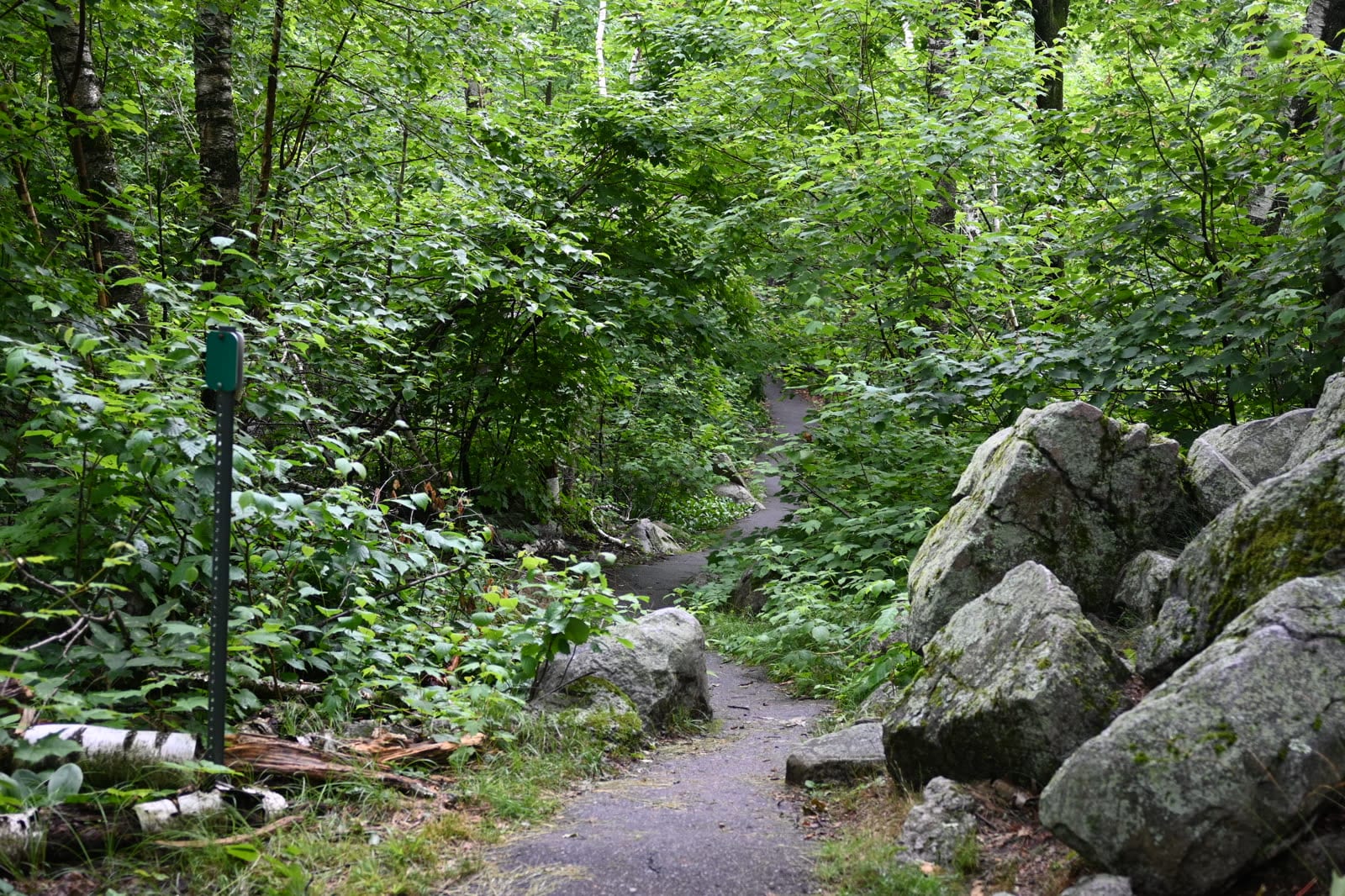
Photo by Dylan Radloff
There’s Still Hope for Our Trails
The money is in peril, but there is still hope for our trails. The hope comes from the people who use them. Volunteers are keeping trails open. In Wyoming, a crew started by the nonprofit Friends of the Bridger-Teton after Forest Service offices lost staff cleared 700 downed trees from 80 miles of trail this summer (County 17). In Washington, Commissioner of Public Lands Dave Upthegrove wrote in March that much of the access people enjoy on state lands is made possible by volunteers from groups like the Washington Trails Association, the Evergreen Mountain Bike Alliance and the Back Country Horsemen of Washington (HeraldNet).
Volunteers can’t replace paid crews. Volunteers can clear a trail on a Saturday but they can’t cover the heavy repairs. Rangers and seasonal staff are also needed for the emergency response a park needs every day. Volunteering keeps trails open while the money is short. It doesn’t fix the money.
That’s where the rest of the hope lies: two decisions in Congress are still open. The first is the full-year park budget, due by Dec. 11. The second is the America the Beautiful Act, which would restart the repair fund. This year, about 960 hikers in Washington state sent more than 4,500 emails to legislators about the maintenance cuts (Washington Trails Association). Here is how you can help:
- Contact Congress before Dec. 11. Tell your senators and representatives what you think about the full-year park budget and the America the Beautiful Act. Find them at congress.gov.
- Join a trail day. Find one near you through your local parks friends group or volunteer.gov.
Every email to Congress and every Saturday on a trail crew helps keep these places open for the next hiker.
Get stories like this every Sunday.
Keep reading

Nature's Nurture: Mothers of the Wild
When it comes to motherhood, human moms often get the spotlight but animal mothers are just as incredible.
Marsh Land Loss: Why It Matters and What We Can Do About It
Discover why marshes are disappearing, their impact on biodiversity, and how you can help preserve these critical ecosystems.
Arson and Wildfires: A Devastating Duo in California
California is in peril—the fires are destroying both nature and the lives of residents. Will we find a solution, or will California continue to burn?